Domain Calculator With Steps Explained Clearly And Practically

Table of Contents
- Fundamentals of Domain Calculators and Their Core Workflow
- Key Components of a Domain Calculator’s Workflow
- Data Interpretation and Actionable Outputs
- Step-by-Step Workflow: How Domain Calculators Process Inputs
- Sequential Processing Steps in Domain Evaluation
- Comparative Workflow: Pricing-Focused vs. Brandability-Focused Calculators
- Key Metrics and Outputs Generated by Domain Calculators
- Categorization of Primary Metrics
- Non-Visual Attributes Evaluated by Advanced Calculators
- Practical Applications: Leveraging Domain Calculators for Strategic Decision-Making
- Real-World Scenarios: Domain Calculators in Branding and E-Commerce
- Decision Matrix Integration: Weighing Cost, Availability, and SEO Potential
- Cross-Referencing Calculator Results with External Validation Tools
- Advanced Features: Beyond Basic Domain Calculations
- Dynamic Input Processing and Workflow Automation
- Visual Representations of Domain Trends
- Feature Comparison: Basic vs. Pro vs. Enterprise Calculators
A domain calculator serves as a precision tool for evaluating potential web addresses, transforming raw inputs into actionable insights. By processing variables such as name availability, extension relevance, and registration costs, these systems streamline decision-making for businesses and individuals alike. This guide dissects the core mechanics of domain calculators, from fundamental workflows to advanced analytical features, ensuring clarity at every stage.
The process begins with structured input validation, where user-provided data undergoes algorithmic assessment to generate metrics like SEO potential, trademark risks, and pricing tiers. A well-designed calculator not only checks technical feasibility but also quantifies intangible factors such as brand memorability and global appeal. Through step-by-step breakdowns, this discussion explores how each component—from initial submission to final output—contributes to an optimized domain selection strategy.
Fundamentals of Domain Calculators and Their Core Workflow
Domain calculators serve as specialized tools designed to automate the evaluation of domain name availability, cost estimation, and registration feasibility. These systems process structured inputs—such as desired domain names, top-level domains (TLDs), or registration parameters—to generate real-time outputs, including pricing tiers, expiration alerts, and ownership statuses. Their primary function bridges the gap between user intent and technical feasibility, ensuring efficient decision-making for domain acquisition or portfolio management.
The core functionality of a domain calculator relies on integrating multiple data sources, including WHOIS databases, domain registrars’ APIs, and pricing algorithms. By standardizing these inputs and applying predefined rules, the tool transforms raw data into actionable insights, such as identifying premium domains, predicting renewal costs, or flagging potential trademark conflicts.
Key Components of a Domain Calculator’s Workflow
A domain calculator’s operational logic is structured around three primary phases: input validation, processing, and output generation. Each phase interacts with distinct data layers to ensure accuracy and relevance. Below is a visual representation of the workflow using a standardized table format:| Input Type | Processing Step | Output Generated |
|---|---|---|
| Domain name (e.g., "TechInnovate") | Cross-referencing with WHOIS and registrar databases to check availability. | Availability status (e.g., "Available," "Registered by [Registrant]," "Pending Deletion"). |
| Top-level domain (e.g., .com, .io, .ai) | Applying TLD-specific pricing rules and registration policies (e.g., ICANN requirements). | Base price range (e.g., "$12/year for .com," "Premium pricing for .ai"). |
| Registration duration (e.g., 1 year, 5 years) | Calculating bulk discounts or renewal intervals based on registrar promotions. | Total cost (e.g., "$59 for 5-year .com registration at 10% discount"). |
| Additional services (e.g., privacy protection, DNS hosting) | Summing service-specific fees and compatibility checks (e.g., DNS provider integration). | Finalized quote with add-on breakdown (e.g., "+$15/year for WHOIS privacy"). |
Data Interpretation and Actionable Outputs
Domain calculators interpret user-provided data through a combination of rule-based logic and external data queries. The system first validates the domain name against syntactic rules (e.g., length limits, allowed characters) before querying authoritative databases. For example:The output of a domain calculator is not limited to binary availability checks but includes contextual data such as:For instance, a user evaluating "BlockChainLegal.com" might receive:
Ownership History: Previous registrant details (if publicly accessible). Renewal Alerts: Expiration dates and renewal cost projections. Trademark Warnings: Potential conflicts with registered intellectual property (e.g., via USPTO or WIPO databases).
This level of granularity enables users to make informed decisions, whether for personal branding, business acquisition, or speculative investing.
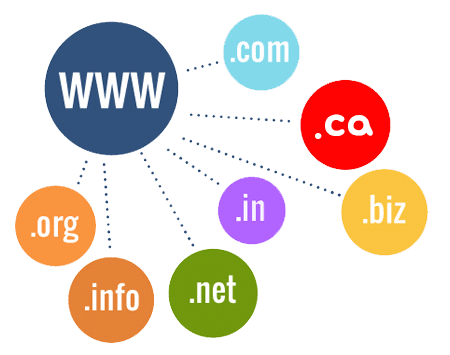
Step-by-Step Workflow: How Domain Calculators Process Inputs
Domain calculators automate the evaluation of domain names by integrating validation, availability checks, and algorithmic scoring to provide actionable insights. The workflow begins with user input and progresses through structured technical assessments, ensuring metrics like keyword relevance, length, and top-level domain (TLD) impact are systematically analyzed. Below is a breakdown of the sequential steps, technical methods, and comparative analysis of two hypothetical calculators prioritizing distinct evaluation criteria.Sequential Processing Steps in Domain Evaluation
The workflow of a domain calculator follows a logical sequence to transform raw input into a scored or ranked output. Each step builds on the previous one, incorporating validation, external data retrieval, and algorithmic computations.Domain calculators typically adhere to the following procedural structure:
-
Input Submission and Initial Validation
The process initiates when a user submits a domain name, which is parsed for syntax errors (e.g., invalid characters, missing TLDs). Alphanumeric and hyphen restrictions are enforced, and reserved keywords (e.g., "admin," "login") are flagged. This step ensures the domain adheres to ICANN’s registration policies before further processing. -
Domain Availability Check
The calculator queries WHOIS databases or registrar APIs (e.g., Verisign, IANA) to verify if the domain is registered or pending deletion. Real-time checks account for pending transfers, sunrise periods, and backorder statuses. Availability results are cross-referenced with domain marketplaces (e.g., Sedo, GoDaddy Auctions) to identify premium or expired domains. -
Keyword and Semantic Analysis
Natural language processing (NLP) techniques evaluate the domain’s keyword density, relevance, and search intent. The calculator assesses:- Exact-match keywords (e.g., "bestlaptops2024.com" for "best laptops 2024").
- Semantic relevance using embeddings (e.g., "techgear" vs. "gadgethub" for technology niches).
- Competitor domain analysis to identify gaps or overlaps in keyword strategies.
Score = (Keyword Frequency × Search Volume) / Domain Length
Where higher scores indicate stronger alignment with user search behavior. -
Length and Readability Assessment
Shorter domains (≤15 characters) receive higher scores due to memorability and reduced typos. The calculator applies:- Phonetic similarity checks (e.g., "Gogle" vs. "Google") using the Levenshtein distance algorithm.
- Readability metrics (e.g., Flesch-Kincaid index) to penalize complex spellings.
-
TLD and Extension Impact Evaluation
The calculator categorizes TLDs by intent:- .com/.net: Generic, high trust, ideal for global brands.
- .io/.co: Tech/startup niches with built-in credibility.
- .ai/.tech: Emerging markets with niche relevance.
TLD Impact = Base Score × (Trust Factor × Niche Relevance)
Where ".com" has a trust factor of 1.0, while ".guru" might score 0.7 for broader audiences. -
Pricing Estimation and Market Demand
The calculator aggregates data from:- Aftermarket prices (e.g., median sale price for similar domains).
- Registrar pricing tiers (e.g., $10–$15/year for .com vs. $50+ for premium TLDs).
- Traffic potential using historical domain appraisals (e.g., EstiBot, DNJournal).
Value = (Traffic Score × 100) + (Keyword Score × 50) + (TLD Premium × 200)
-
Brandability and Trademark Risk Assessment
Trademark databases (e.g., USPTO, WIPO) are queried for conflicts. The calculator evaluates:- Phonetic and visual similarity to existing trademarks.
- Domain squatting risks (e.g., "applewatchstore.com" vs. "apple.com").
– 30% for exact trademark matches,
– 15% for near-matches (e.g., "Go0gle.com").
-
Final Scoring and Output Generation
Aggregated metrics are normalized into a composite score (e.g., 0–100) or ranked against a benchmark (e.g., "Top 10% of domains"). Outputs may include:- Recommendations for improvements (e.g., "Add a keyword: 'crypto'").
- Comparative analysis with top-performing domains in the niche.
- Actionable steps (e.g., "Register now," "Check trademark status").
Comparative Workflow: Pricing-Focused vs. Brandability-Focused Calculators
Domain calculators prioritize different evaluation criteria based on user needs. Below is a side-by-side comparison of two hypothetical calculators: PricePro (prioritizing cost efficiency) and BrandForge (optimizing for brand strength).| Step | PricePro Workflow (Pricing-Centric) | BrandForge Workflow (Brandability-Centric) | Key Differentiator | |||||||||||||||||||||||||||||||||||||||||||||||||||
|---|---|---|---|---|---|---|---|---|---|---|---|---|---|---|---|---|---|---|---|---|---|---|---|---|---|---|---|---|---|---|---|---|---|---|---|---|---|---|---|---|---|---|---|---|---|---|---|---|---|---|---|---|---|---|
| 1. Input Validation |
Validates syntax and checks for hyphenated domains (penalized for higher perceived cost).Example: "my-domain.com" → Lower score than "mydomain.com". |
Validates syntax and flags trademarkable terms (e.g., "Amazon" in non-Amazon domains).Example: "AmazonBooks.com" → Immediate brand risk alert. |
PricePro ignores brand keywords; BrandForge prioritizes trademark conflicts. | |||||||||||||||||||||||||||||||||||||||||||||||||||
| 2. Availability Check |
Queries registrar APIs and aftermarket listings to fetch lowest possible registration cost.Example: ".ai" TLDs may show as $100 vs. $15 for .com. |
Checks availability and historical sales data to avoid domains with past disputes.Example: "BitcoinExchange.com" → Avoids if previously litigated. |
PricePro focuses on immediate cost; BrandForge considers long-term legal risks. | |||||||||||||||||||||||||||||||||||||||||||||||||||
| 3. Keyword Analysis |
Scores domains based on search volume and auction demand.Example: "CryptoWallet.io" scores high if frequently sold at auctions. |
Scores based on semantic uniqueness and brand potential.Example: "NovaPay" scores higher than "CryptoWallet" for brandability. |
PricePro leverages market trends; BrandForge emphasizes originality. | |||||||||||||||||||||||||||||||||||||||||||||||||||
| 4. TLD Selection |
Recommends cheapest viable TLD (e.g., ".store" over ".com" if price differs by $50).Example: ".online" at $12 vs. ".com" Query databases such as the USPTO (tmsearch.uspto.gov) or EU IPO (euipo.europa.eu) to: Advanced Features: Beyond Basic Domain CalculationsThe evolution of domain calculators reflects the growing demand for precision in digital asset assessment. Features such as bulk analysis, historical trend forecasting, and API-driven workflows address gaps left by traditional tools, enabling users to evaluate portfolios, monitor market shifts, and automate workflows. Below, the core advanced functionalities are explored, including their technical workflows, visualization capabilities, and comparative performance across calculator tiers. Dynamic Input Processing and Workflow AutomationAdvanced domain calculators employ modular architectures to handle multi-variable inputs, combining keyword sets, top-level domains (TLDs), and geographic constraints into cohesive queries. Unlike basic tools that process single domains or fixed parameters, premium calculators dynamically adjust calculations based on user-defined rules, such as:The underlying workflow can be visualized as follows: ```html
User Input
Dynamic Query Generation
API/Database Integration
Output & Visualization
```
Key Technical Considerations: Visual Representations of Domain TrendsAdvanced calculators translate raw data into intuitive visualizations, such as heatmaps, to highlight patterns in domain demand, valuation, or market saturation. For example, a TLD Popularity Heatmap might use color gradients to represent:Logic Behind Heatmap Generation: Example Use Case: Feature Comparison: Basic vs. Pro vs. Enterprise CalculatorsThe capabilities of domain calculators scale with tier complexity, addressing distinct user needs—from casual buyers to institutional investors. Below is a comparative analysis of key features:
Enterprise-Level Advantages: Mastering domain calculators empowers users to navigate the complexities of digital identity with confidence and precision. By leveraging structured workflows, prioritized metrics, and advanced features, stakeholders can mitigate risks and maximize opportunities in domain acquisition. Whether for startup branding, e-commerce expansion, or personal projects, these tools bridge the gap between intuition and data-driven decisions, ensuring selections align with strategic objectives. The future of domain evaluation lies in deeper integration, predictive analytics, and user-centric customization—transforming a routine task into a competitive advantage. | |||||||||||||||||||||||||||||||||||||||||||||||||||||
Leave a Comment
Comments are moderated before appearing. The data you submit is processed according to the Privacy Policy of vitacrm.vitanur.com.